Blog
 vocabulary
Smog, Brunch, Chortle: A Field Guide to Portmanteau Words
Smog, brunch, motel, chortle: English is full of portmanteau words. Lewis Carroll named them, and the dictionary still records the seams.
 vocabulary
Buzz, Hiss, Clang: The Words That Sound Like What They Mean
Some English words are built from the sound they name — buzz, hiss, clang. A look at onomatopoeia and how the classics put it to work.
 guides
The Hidden Order of Adjectives: Why It's a 'Big Red Ball,' Not a 'Red Big Ball'
English sorts stacked adjectives by a strict unwritten rule: opinion, size, age, shape, colour. You follow it perfectly, and were never taught it.
 vocabulary
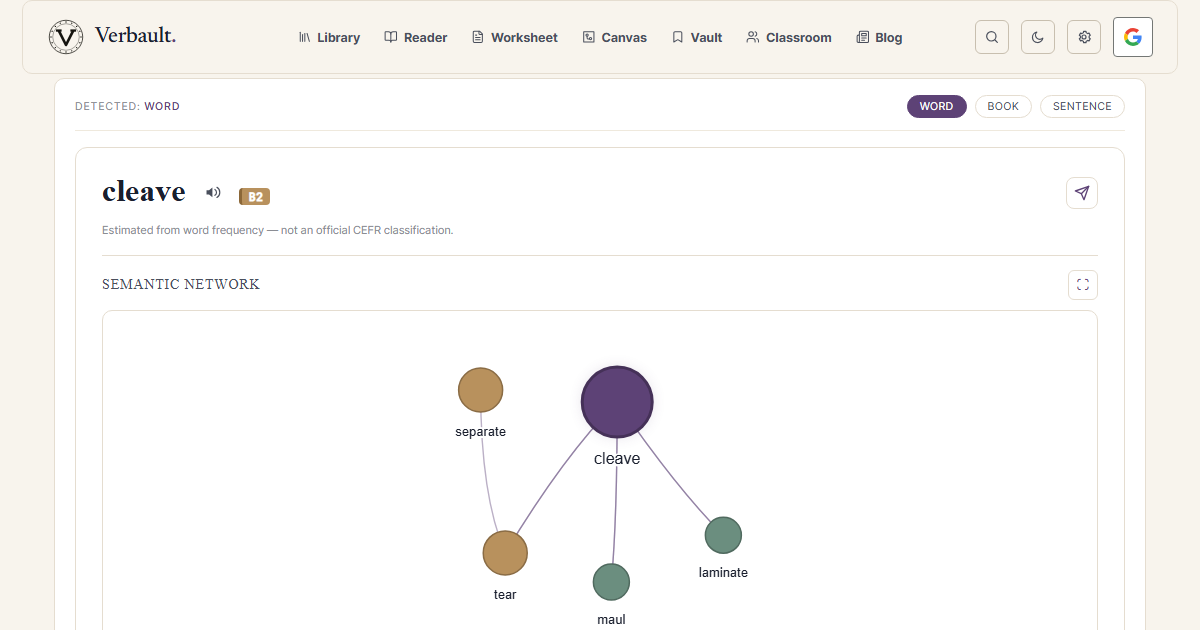
Cleave, Sanction, Dust: Words That Mean Their Own Opposite
Some English words are their own opposite — to cleave is to split or to cling, to sanction is to approve or to punish. A field guide to contronyms.
 vocabulary
Is Dracula Hard to Read? What Actually Makes It Difficult
Dracula reads easier than its reputation suggests. The real difficulty is its dialect voices and its diary structure, not its vocabulary.
 guides
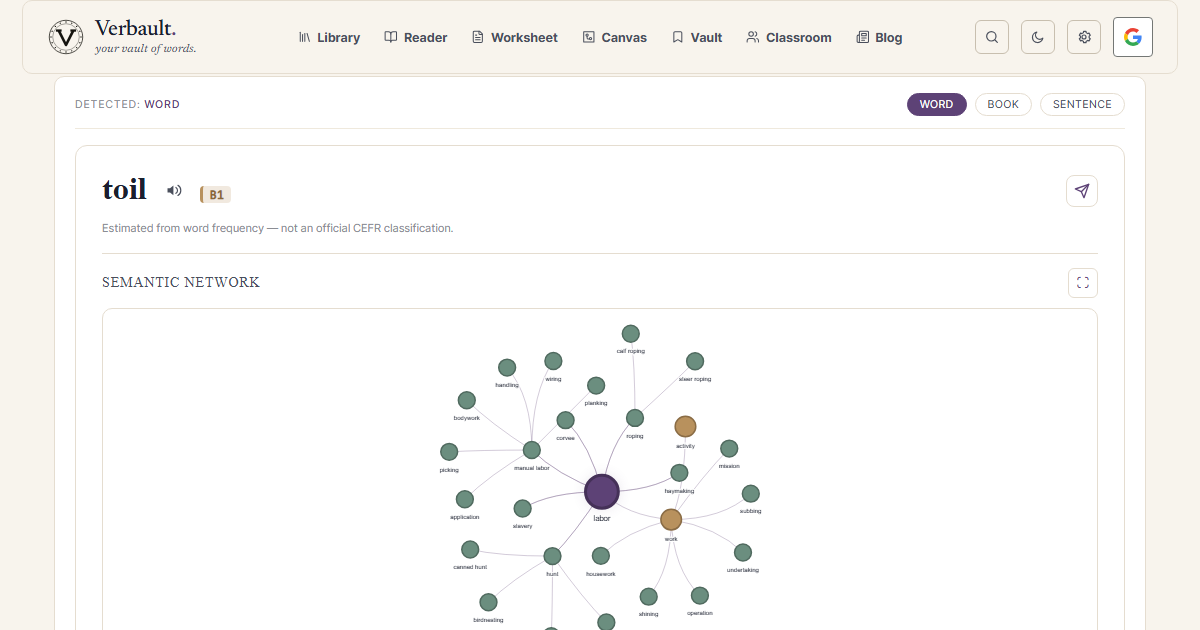
When to Look Up a Word — and When to Keep Reading
Looking up every unfamiliar word kills the story; looking up none leaves you lost. A simple rule for deciding which words actually need a definition.
 guides
Where to Start with the Classics: Why Difficulty Isn't One Number
A classic's difficulty is two things: how rare its words are and how long its sentences run. Here's how to read both before you open the book.
 guides
Word Order Is English Grammar: How Position Decides Meaning
English barely changes its words, so it leans on word order to show who did what. Here's how position carries the grammar, and how to see it.
 guides
How to Read Shakespeare's English Without a Glossary
'Wherefore art thou' never meant 'where are you.' A guide to the pronouns, verb endings, and false friends that make Shakespeare hard to read.
 vocabulary
Slim, Slender, Skinny: How to Choose Between Near-Synonyms
'Slim', 'slender', and 'skinny' mean nearly the same thing — but you can't swap them. How near-synonyms differ in feeling, formality, and precision.
 vocabulary
Why Is There a 'B' in Debt? The Story of Silent Letters
The silent b in debt, the s in island — English spelling looks random, but each silent letter is a fossil with a story you can trace on any word page.
 guides
How to Read a Long Sentence Without Losing the Thread
You know every word and the sentence still defeats you. Why classic prose runs long, and how to find the subject, verb, and spine of any sentence.