#vocabulary
 vocabulary
Smog, Brunch, Chortle: A Field Guide to Portmanteau Words
Smog, brunch, motel, chortle: English is full of portmanteau words. Lewis Carroll named them, and the dictionary still records the seams.
 vocabulary
Buzz, Hiss, Clang: The Words That Sound Like What They Mean
Some English words are built from the sound they name — buzz, hiss, clang. A look at onomatopoeia and how the classics put it to work.
 vocabulary
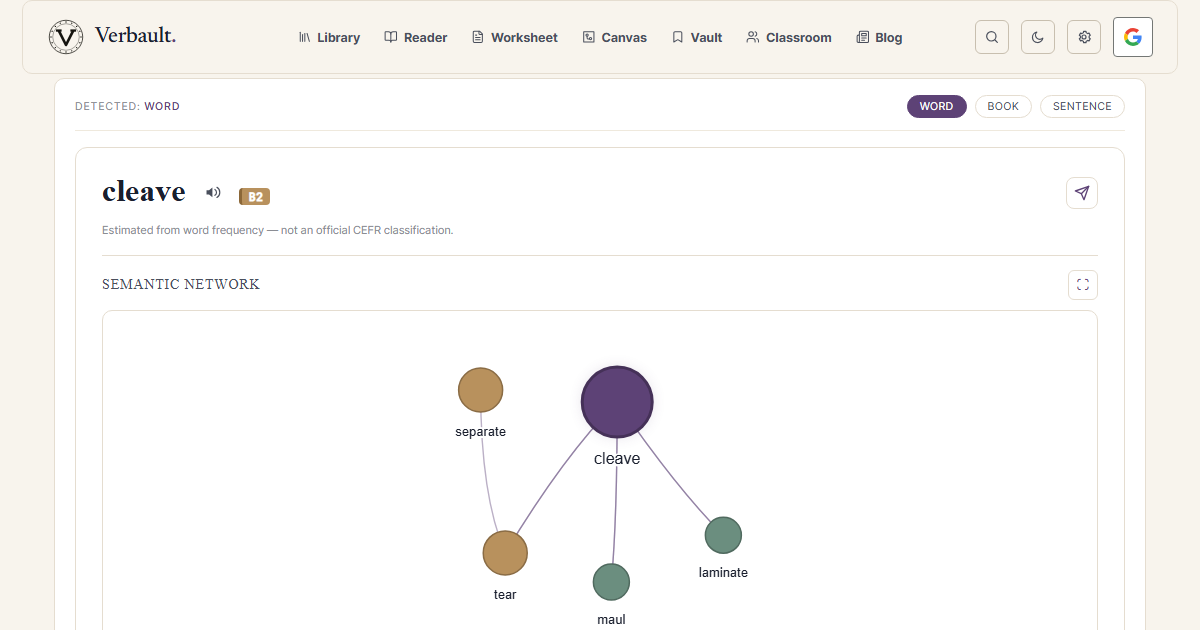
Cleave, Sanction, Dust: Words That Mean Their Own Opposite
Some English words are their own opposite — to cleave is to split or to cling, to sanction is to approve or to punish. A field guide to contronyms.
 vocabulary
Is Dracula Hard to Read? What Actually Makes It Difficult
Dracula reads easier than its reputation suggests. The real difficulty is its dialect voices and its diary structure, not its vocabulary.
 guides
When to Look Up a Word — and When to Keep Reading
Looking up every unfamiliar word kills the story; looking up none leaves you lost. A simple rule for deciding which words actually need a definition.
 vocabulary
Slim, Slender, Skinny: How to Choose Between Near-Synonyms
'Slim', 'slender', and 'skinny' mean nearly the same thing — but you can't swap them. How near-synonyms differ in feeling, formality, and precision.
 vocabulary
Why Is There a 'B' in Debt? The Story of Silent Letters
The silent b in debt, the s in island — English spelling looks random, but each silent letter is a fossil with a story you can trace on any word page.
 vocabulary
Collocations: Why It's 'Make a Decision,' Not 'Do a Decision'
English says 'make a decision,' never 'do a decision' — by habit, not rule. What collocations are, and how reading the classics teaches them.
 guides
How to Get Better at Reading English (Without Just Reading More)
Getting better at reading English isn't about reading more — it's about reading at the right level and turning the words you meet into words you keep.
 vocabulary
Words That Were Once People: How Names Like Quixote and Boycott Became Everyday English
Quixotic, panic, boycott, mentor — each was once a person's name. How names slip into the dictionary, and how to spot one on any word page.
 vocabulary
Why English Has Two Words for Almost Everything
English keeps a plain Saxon word and a formal Latin one for almost everything — ask and inquire, swine and pork. Here is why, and how to hear it.
 vocabulary
Why Moby-Dick Is So Hard to Read (And How to Read It Anyway)
It opens with one of the most famous lines in English — then the difficulty arrives. What actually makes Moby-Dick hard, and how to read it anyway.