Occur, Current, Course: The Hidden 'Run' in Cur- Words

The verb hiding inside occur, current, and course
Say occur, recur, current, and course and the shared cur is easy to miss — it sits at the front of some words and the back of others. But under the different prefixes and spellings, these all carry the same Latin verb: currere, "to run." A current is water running; a course is the path you run; when something occurs, it runs up to meet you. Learn run once, and a shelf of unrelated-looking words turns into a single idea with variations.
One verb, many kinds of running
Here is the family, with the sense each prefix adds. Most of these word pages print the Latin root in their origin line, so you can check for yourself.
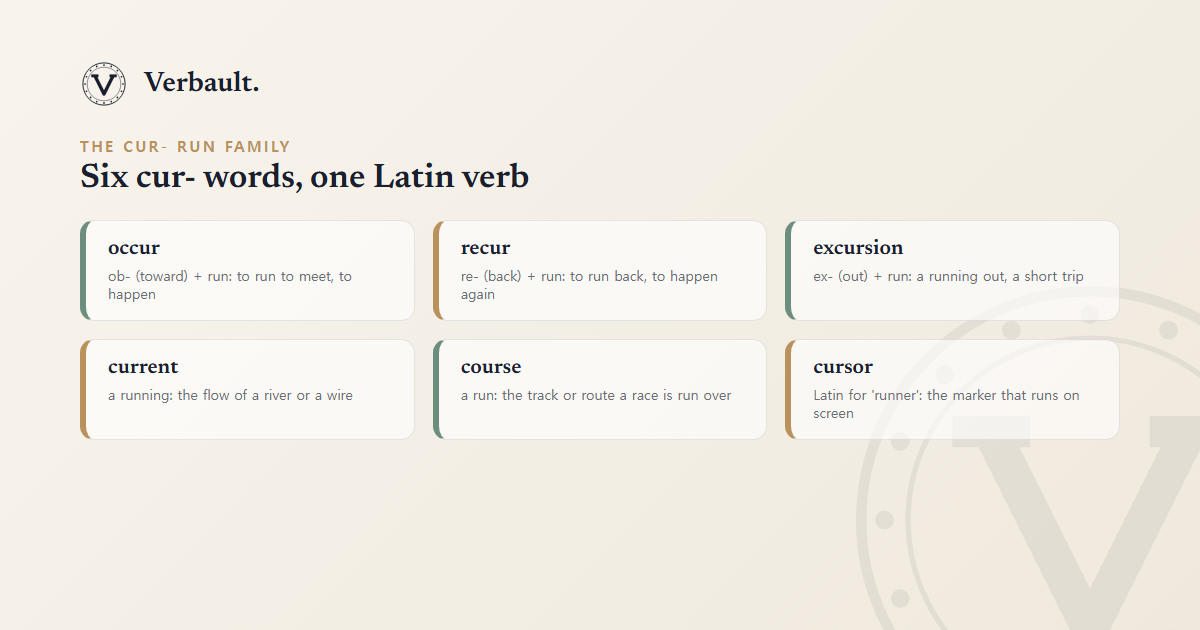
- occur — ob-, "toward": to run to meet, and so to happen. An idea occurs to you when it runs up into view.
- recur — re-, "back": to run back. A problem that recurs keeps running back to you.
- excursion — ex-, "out": a running out. An excursion is a short run away from home and back again.
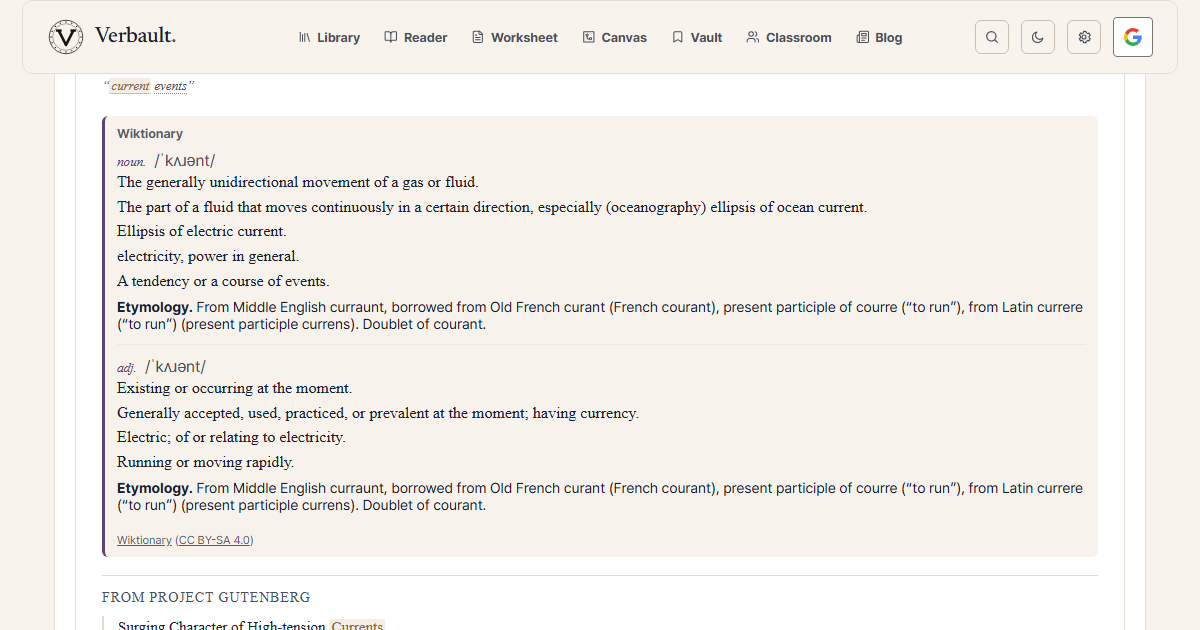
- current — a running: the flow of a river, and later of electricity. It is currere worn down to a single word for "the thing that runs."
- course — a run: the track a race is run over, and so any set route — a river's course, a course of study, the courses of a meal arriving in order.
- cursor — Latin for "runner." The little marker that runs across your screen is, literally, a runner.
The prefix changes the direction of the running; the root keeps the running itself constant.
The spelling shifts, the root holds
In some of these words the -cur- smooths into -curs- or -cour-. That is not a different root; it is the same verb's past-participle stem, cursus, surfacing:
- cursive — writing that runs the letters together.
- precursor — prae-, "before": one who runs ahead, a forerunner.
- concur — con-, "together": to run together, and so to agree.
- incur — in-, "into": to run into something, usually a cost or a risk.
- discourse — dis-, "apart": a running to and fro of talk.
When you spot -cur-, -curs-, or -cours- inside an English word, it is often this same Latin verb, still running after two thousand years.
The word that only looks like family: secure
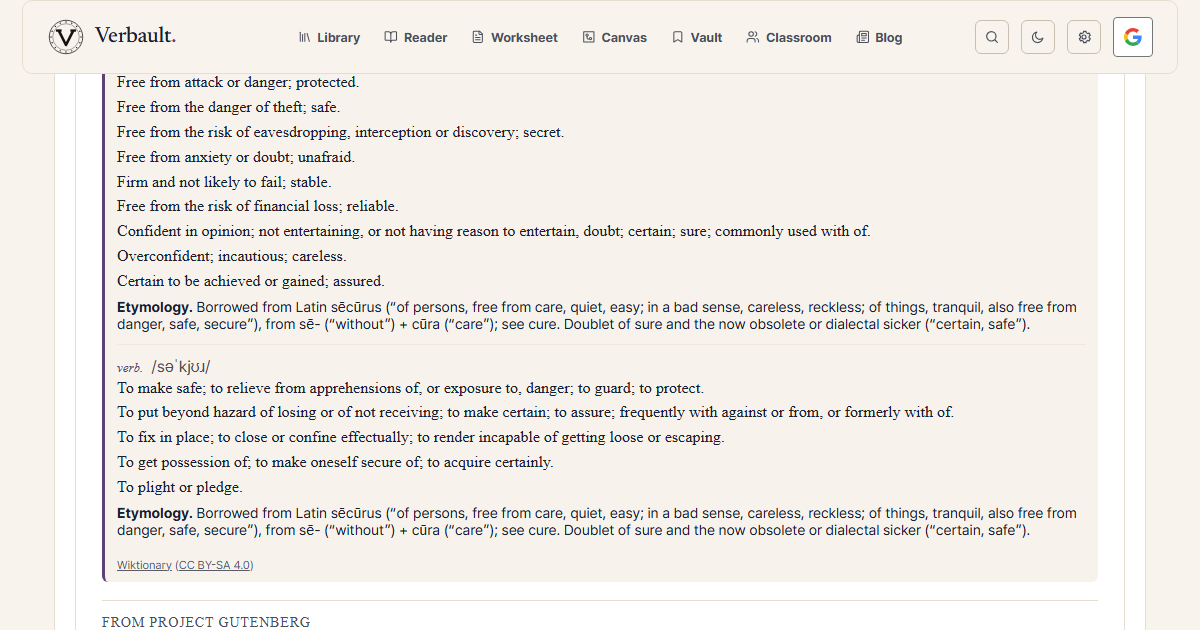
Now for the impostor. Secure starts with the same cur, and holding something securely feels close enough to the rest that you would forgive anyone for filing it with them. But secure has nothing to do with running. Its word page traces it to Latin sēcūrus — sē-, "without," plus cūra, "care." To be secure is, at root, to be without care: free from worry.
The company secure keeps gives it away. Its real relatives are not current and cursor but cure (cūra, the care that heals), curious (full of care, in the old sense of inquiring attention), and curator (one who cares for a collection). The loveliest of them is sinecure — sine cūrā, "without care," a paid post with no duties attached. Even accurate is literally done with care. Every one of these goes back to cūra, "care." Secure wandered into the cur neighbourhood wearing the same coat as occur and current, but it grew up in a different house.
Why this is worth knowing
When you next meet an unfamiliar cur word, "run" is a good opening guess for its core meaning; read the prefix for the direction and you are usually most of the way there. Just treat the letters as a hint, not a law. Secure, cure, and curious run nowhere — they come from care. And a couple of others only look the part: curt (Latin curtus, "shortened") and the cur that means a mongrel dog (an old word all its own) share nothing with either family. The spelling lines up by accident; the roots do not.
The way to be sure, every time, is the origin line, and each Verbault word page prints it. Open current in one tab and secure in another, and the two roots — run and care — are right there to compare.
You can also catch them in the wild. Open a chapter in the Reader and tap a cur word: the meaning that fits the sentence comes up first, and its origin is one tap below — so the shared run, or the odd word that only pretends to belong, is easy to spot as you read.
Comments (0)
Log in to comment.